
Claude Code vs Codex for game development

On this page
Which should you pick?
Start with the one your plan already covers, and judge it on one small game. The documented differences below can settle the rest.
- Claude Code if you pay for a Claude plan. Pro and Max include it, the Free plan doesn’t, and for browser games it can test in your own Chrome window.
- Codex if you use ChatGPT on any plan. It has a free start, an open-source command-line tool, a built-in browser in the ChatGPT apps, and cloud tasks.
- Both if you like to compare. One instructions file can even serve both tools, and the section on using both explains how.
Codex here means OpenAI’s coding agent, not the board game that happens to share the name. The tool facts on this page are as of September 2026.
How the two compare
They match on the basics, and the real differences are plans, browser testing and where they run. The table sticks to what each maker’s own documentation says.
| Criterion | Claude Code | Codex |
|---|---|---|
| Maker | Anthropic | OpenAI |
| Where it runs | Terminal, VS Code and JetBrains extensions, desktop app, web at claude.ai/code | Command line, IDE extension for VS Code, Cursor and Windsurf, desktop app, cloud at chatgpt.com/codex |
| Access | Claude subscription or Anthropic Console account | ChatGPT account, or an OpenAI API key |
| Price to start | Pro, $20 a month. Not in the Free plan | Included in Free ($0) and Go ($8 a month) |
| Instructions file | CLAUDE.md, and AGENTS.md when a project has no CLAUDE.md |
AGENTS.md, up to 32 KiB by default |
| Plan first | Plan mode: Shift+Tab, or claude --permission-mode plan |
Plan mode: /plan |
| Browser testing | Chrome integration: needs the Claude in Chrome extension and a direct Anthropic plan, not in WSL | Built-in browser in ChatGPT web and desktop app, not in the CLI or IDE extension |
| Add tools (MCP) | claude mcp add <name> -- <command> |
codex mcp add <name> -- <command> |
| Cloud tasks | Web sessions at claude.ai/code | Tasks that end in a diff or pull request |
| Models | Claude Fable 5.1, Opus 5.5, Sonnet 5.5, Haiku 4.5 | GPT-6 Astra, GPT-6.1 Sol, GPT-6 Luna |
The table draws on each maker’s own docs.
- For Claude Code, Anthropic’s overview, memory docs, best practices, Chrome guide, MCP docs, product page and plans.
- For Codex, OpenAI’s README, CLI docs, AGENTS.md docs, best practices, browser docs, MCP docs, cloud docs and pricing.
A few details didn’t fit in the table. Codex’s command-line tool is open source under the Apache-2.0 license. Claude Code’s Chrome integration works with Chrome and Edge, and it detects other Chromium browsers. Codex’s browser can’t automate file uploads, and in the Codex CLI a Playwright MCP server stands in for it.
Use both in one project
You can, and it’s easier than it sounds. Codex reads AGENTS.md, and Claude Code reads it too when a project doesn’t have a CLAUDE.md. If you do keep a CLAUDE.md, Anthropic’s docs say to import the shared file at the top (memory docs).
@AGENTS.md

Use plan mode for changes to the game loop.
Put the stack, the run command, the controls and the asset-path rule in AGENTS.md. Reading AGENTS.md directly needs Claude Code v2.1.277 or later, and the import works either way.
JellyBlob is a nice example of switching between them. According to its creator, AI wrote all of the code, first with GPT-6 Astra in Codex and then, in a remake, with Claude Opus 5.5 in Claude Code.
Both work with Unity and Godot
Both agents write GDScript and C# like any other code, and both connect to the engines’ editors through MCP servers, using the add commands in the table above.
- Godot. The community godot-mcp server launches the editor, runs the project and reads its debug output. Its README gives
claude mcp add godot -- npx @coding-solo/godot-mcp, and Codex takes the same server withcodex mcp add. - Unity. Unity’s official agent plugin supports both Claude Code and Codex on Unity 6 or later. Unity’s CLI connects Claude Code to a running editor with
unity mcp configure claude, and the community MCP for Unity server works with any MCP client. Unity’s own AI tools also include a gateway that brings Claude or Codex into the editor (Unity).
We don’t have many games on these engines to compare yet, though. Creators name Claude Code on 6 Godot and 3 Unity games, and Codex on 3 and 2.
We gave both agents the same game prompt
On October 1, 2026 we gave Claude Code and Codex the same prompt, a neon arena survival game in one HTML file.
We ran three rounds, with Claude Code on Claude Opus 5.5 and Codex on GPT-6.1 Sol. First each agent built the game, then improved it after a playtest, and then polished it. Between rounds, each one got screenshots of the same seeded bot playing its game. Codex had a shell in its sandbox, while Claude Code had file tools only, so no shell and no browser.
Codex made pretty good use of that shell.
It installed Playwright, opened its game in Chrome, wrote a helper that steered the ship toward gems and ran it until the ship died. It named the game VOID PULSE, and its own task notes say what it couldn’t check: “Sound was measured, not manually auditioned.”
Claude Code’s start was a little rougher.
At its maximum effort setting it thought for about 45 minutes over two attempts, hit the output token limit both times and wrote nothing at all. At high effort it wrote PRISMFALL in about twenty minutes, and said “I couldn’t open a browser from here, so I haven’t actually played it.”
The playtest screenshots pushed both games the same way. Each agent even called its first build sparse, and each added a meter that charges and then bursts, Pulse Drive in VOID PULSE and Prism Overdrive in PRISMFALL.
In the polish round, Codex made a neat catch. It found that the first tap, the one that starts the game, came before the browser allowed sound, so a run could start silent. Claude Code saw its bot still at full health after a minute and a quarter and made the enemies tougher, which is a fair reading of those screenshots.
The timing is a bit tricky to compare. Codex spent about an hour across the three rounds, while Claude Code spent under half an hour at high effort, after the 45 minutes that produced nothing.
That’s one game over three rounds, so read it as a story rather than a benchmark. And to be fair to Claude Code, it only worked blind because of our setup, since its Chrome integration lets it test in Chrome.
The games creators made with each
These counts are as of November 21, 2026. Of the 588 games we list, 414 came from Vibe Jam 2026.
That jam’s rules required at least 90% of the code to be written by AI. Creators name the tools themselves, mostly in the jam submission form, and we don’t verify those names (how we count).
Creators name Claude Code on 224 games and Codex on 101, and the next table sets those two groups against the full catalog.
| Measure | Claude Code games | Codex games | All 588 listed games |
|---|---|---|---|
| Listed games | 224 | 101 | 588 |
| Use Three.js | 131 (58%) | 67 (66%) | 322 (55%) |
| No engine stated | 45 (20%) | 14 (14%) | 151 (26%) |
| Playable on mobile | 129 (58%) | 53 (52%) | 293 (50%) |
| Online multiplayer | 88 (39%) | 42 (42%) | 200 (34%) |
| Top genre | Action | Action | Action |
The two groups look a lot alike. Most games in each use Three.js and list mobile, and action leads for both tools.
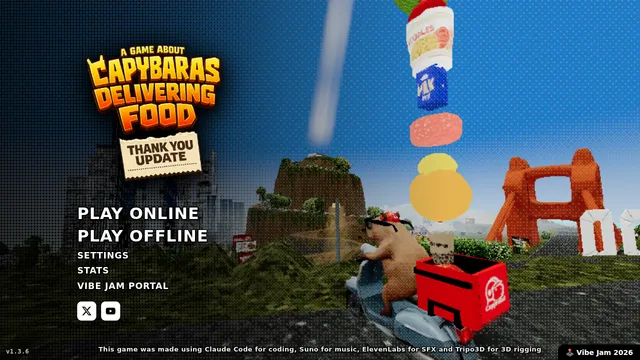
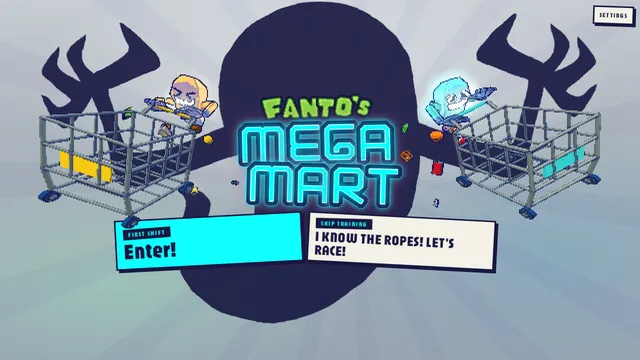
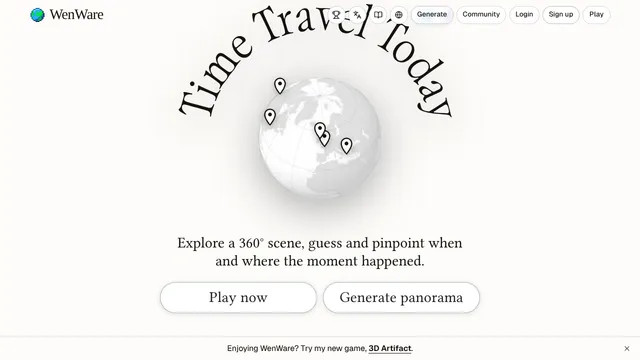
At the very top, the jam’s results post names the capybara courier A Game About Capybaras Delivering Food first, and its entry lists Claude Code. The haunted grocery race Fanto’s Mega-Mart came second and the history guessing game WenWare third, and both entries list Codex.
A bit further down, Sunset City - The Dark Tower (Claude Code) placed 8th and the bonsai game Kanso (Codex) 9th.
Creators name both tools on 13 games, among them Tech Bros: Save the World, Draw the Life and Rummy - Ombesh.
None of this ranks the tools, since the counts only show what creators of the games we list used. You can browse each group on the Claude Code hub and the Codex hub.
What each costs, and which models they run
As of September 2026, Claude Code comes with paid Claude plans, and its usage limits are shared with the Claude chat app (Claude Help Center). Codex comes with every ChatGPT plan, and OpenAI counts its usage in local messages per five-hour period (OpenAI pricing).
| Plan | Claude Code | Codex |
|---|---|---|
| Free start | Not included | Included |
| Entry price | Pro, $20 a month | Go, $8 a month, and Plus, $20 a month |
| Higher tiers | Max, from $100 a month | Pro, $100, $200 or $500 a month |
| Pay per token | Console account, at API rates | OpenAI API key |
Anthropic’s model overview lists four current models and suggests starting with Claude Opus 5.5 for most workloads.
OpenAI’s Codex models page lists GPT-6 Astra, GPT-6.1 Sol and GPT-6 Luna.
Its changelog dates GPT-6.1 Sol to September 29, 2026, just two days before our duel.
Only 38 of the 312 games that name either tool also name a model version, so we really can’t say which model made which game.
How we compared them
Every tool fact here comes from the makers’ own documentation and pricing pages, which we read in September 2026. The counts cover the 588 games in our catalog as of November 21, 2026, with the tools their creators listed.
The head-to-head above is one game built over three rounds rather than a benchmark, and this page doesn’t rank the tools by quality. Plans and models change often, so check the linked pages before you pay.
A guide for each agent, and more to compare
Claude Code game development and Codex game development give you a workflow for each agent, and MCP servers for game development covers the servers behind the Unity, Godot and browser setups above. Cursor game development is about the editor that can host either agent’s extension.
Make games with ChatGPT and make games with Gemini cover the chat and agent routes at OpenAI and Google. Best AI for game development and best AI game makers put more tools side by side.
For games, there are hubs for games made with Claude and OpenAI games, plus the Vibe Jam 2026 archive.
Games to look at
 , Phone friendly , Online multiplayer
A Game About Capybaras Delivering Food
Drive capybaras around a cozy open world delivering food without toppling the fruit stack.
 ClaudeSimulation 2 votes
 , Online multiplayer
Fanto's Mega-Mart
Race through a haunted grocery store at rocket speed, grabbing items as you go.
 , Phone friendly , Online multiplayer
WenWare
Guess the place and year of a 360-degree historical scene.

Tech Bros: Save the World
Fight off waves as a satirical tech mogul and take down rival billionaire bosses.
ClaudeAction  , Phone friendly
Sunset City - The Dark Tower
Climb toward the Black Tower while sneaking past guards who watch the city.
ClaudeAction 1 vote


Questions
Is Claude Code or Codex better for game development?
Neither wins in our data. The #1 game of Vibe Jam 2026 lists Claude Code, and #2 and #3 list Codex. Creators name Claude Code on 224 of our 588 listed games and Codex on 101, but that shows how much each is used rather than how good it is.
Can I use Claude Code and Codex in the same project?
Yes. Codex reads AGENTS.md, and Claude Code reads it too when a project doesn't have a CLAUDE.md. If you keep a CLAUDE.md, an @AGENTS.md line in it shares the one file, and we list 13 games that name both tools.
Which is cheaper for game development?
Codex is cheaper to start with, since it's in the Free plan and Go is $8 a month. Claude Code needs Pro at $20 a month or a Console account, and Codex Plus is also $20. Limits differ by plan, so try one small game before you pay.
Which one can test my game in a browser?
Both. Claude Code connects to Chrome through the Claude in Chrome extension, and Codex has a built-in browser in ChatGPT on the web and in the desktop app. In the Codex CLI, where that browser isn't available, a Playwright MCP server does the job.
Can Claude Code or Codex make Unity or Godot games?
Yes, both write GDScript and C# like any other code, and both connect to the editors through MCP servers. For Godot, the community godot-mcp server lets either agent run the project and read its debug output. For Unity, Unity's official agent plugin supports both, and Unity's CLI connects Claude Code to a Unity 6 editor.