Vibe coding game jam rules, dates and a plan

On this page
Vibe Jam asks you to make a brand-new game with AI that opens on the web almost instantly. Other jams go the other way and ban AI-generated art, or AI-generated content altogether, so read the rules of the edition you’re entering before you decide how to build.
Vibe Jam was organized by Pieter Levels (levelsio). We checked the jam facts on this page in September, and each one links to its source.
Which game jams allow AI?
It depends on the jam, and sometimes even on the year.
| Jam | When | Rule on AI |
|---|---|---|
| Vibe Jam 2026 | April 1 to May 1, 2026 | At least 90% of the code written by AI |
| Vibe Jam 2025 | 2025 edition | At least 80% of the game written by AI, code and assets included |
| AI Browser Game Jam 5 (itch.io, host Focaccai) | Submissions October 17 to 31, 2026 | Heavily AI-assisted, with the majority of the game AI generated. AI is welcome for art, code, design, music and sound |
| Ludum Dare | Policy in its FAQ | AI assistant and co-pilot tools can be used without restriction. Opt out of any category where a content generator made about 90% of the work |
| GMTK Game Jam 2026 | July 22 to 26, 2026 | No generative AI for art or audio assets, or the game is disqualified. Organizers also ask entrants not to use AI at all, but police only art and audio |
| Godot Wild Jam | Policy posted February 9, 2026 | Bans AI-generated content, code included. Entries found using it are disqualified |
Even the entry limits differ. Vibe Jam 2026 allowed one entry per person, while AI Browser Game Jam 5 lets you enter as many games as you like, as long as they’re significantly different, which is handy if you’ve got more than one idea. What the AI Browser Game Jam built compares its first four editions with Vibe Jam.
Ludum Dare is a special case, since it canceled its 2025 events, and Game Developer later reported that the series is scheduled to end in October 2028 (Game Developer). Check its schedule before you plan around it.
What did Vibe Jam 2026 require?
Basically, a new, AI-written game that opens on the web almost instantly. The jam’s FAQ defines vibe coding as using AI assistants as your primary development tool (jam page), and the rules filled in the details.
-
AI share. At least 90% of the code had to be written by AI.
-
New work. Only games created during the jam counted, so nothing that existed before April 1, 2026. Libraries and frameworks such as Three.js weren’t a problem, but the game itself had to be brand new.
-
Web, free, no login. The game had to be playable without signup, preferably on its own domain or subdomain.
-
Instant start. No loading screens or heavy downloads.
-
One entry per person.
-
A required script. Every game had to add the jam’s widget script to its HTML, and the rules said games without it are disqualified.
-
Nice to have. Multiplayer was preferred but wasn’t required, and any engine was allowed, though Three.js was usually recommended.
-
Deadline. Entries were due on May 1 at 13:37 UTC.
The earlier edition counted assets as well as code toward its AI requirement, and allowed single-player or multiplayer games (2025 jam page).
| Edition | AI requirement |
|---|---|
| 2025 | At least 80% of the game, assets included |
| 2026 | At least 90% of the code |
The earlier edition drew more than 1,000 games, and for 2026 the press page records 945 submissions (press page). Pieter Levels’s results post names A Game About Capybaras Delivering Food, Fanto’s Mega-Mart and WenWare as the top three.
What did the entries look like?
They were mostly Three.js games that list mobile, and online multiplayer was more common near the top.
The table only covers the jam entries we list, as of November 14, 2026, so it’s a sample of all submissions, and the rank is the jam’s final placement.
| Trait | Top 50 in our catalog (42 games) | All 414 entries in our catalog |
|---|---|---|
| Three.js | 36 (86%) | 283 (68%) |
| List mobile | 31 (74%) | 275 (66%) |
| Online multiplayer | 29 (69%) | 186 (45%) |
The jam said multiplayer was preferred, which may have helped those entries. Either way, most of the entries from the top 50 that we list use Three.js and list mobile.
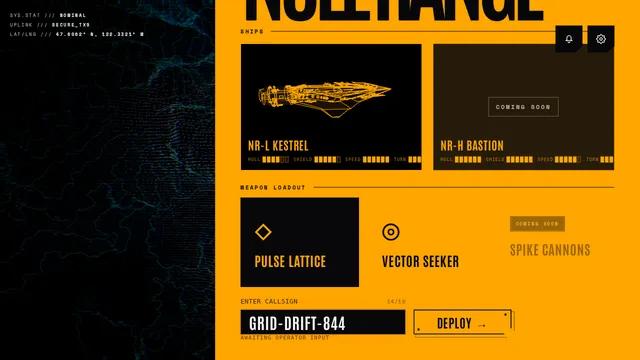
The special awards went to pretty different games. HALDANE-4, an ASCII horror game, won Most Original, and Null Range, a space dogfighter, won Best Art Direction. Kanso, a bonsai game, won Most Zen, while WenWare, a history guessing game, won Most Played. You’ll find all of them on the Vibe Jam 2026 hub.
Get the paperwork done before building the loop
There are eight steps from the rules to the release, and the boring ones come first.
-
Read the rules for your edition. Vibe Jam changed from counting the whole game, assets included, to counting only code, so an older edition’s rules can send you toward the wrong target.
-
Do the paperwork on day one. The Vibe Jam 2026 rules said games without the widget script are disqualified, which would be a painful way to go out. Add required snippets and forms before you build anything.
-
Prototype several ideas and keep the best loop. The creator of Ranger Danger says it was the most fun loop among several one-shot ideas they tried.
-
Keep the first load tiny. HALDANE-4 fits a whole horror game into under 5 MB with ASCII graphics and procedurally generated sound, and Shatter Drift loads at under a megabyte, according to their entries. Game assets with AI goes into assets in more detail.
-
Test on a phone early. Most highly placed entries in our catalog list mobile, and how to make a mobile game with AI covers what to check.
-
Scope to the clock. Kanso was built in about a week and Doctrine in about two, according to their creators, while Vibe Jam 2026 ran a month and GMTK Game Jam 2026 only about four days. So the same idea can be plenty of work for one jam and a comfortable fit for another.
-
Keep a record of your prompts and commits. Vibe Jam required AI-written code, and AI Browser Game Jam has an AI Usage voting category. Neither asks for a record, but having one lets you show how the game was made if anyone asks.
-
Submit the game. Once it’s playable, you can submit it to GamesByAI too.
What if a jam bans AI?
Then you follow the ban, of course. GMTK Game Jam 2026 says AI art and audio lead to disqualification, and Godot Wild Jam says any entry found using AI-generated content will be disqualified, so save those jams for games you make by hand.
If you’re curious about the difference between letting an AI write the code and actually reading it, vibe coding a game goes into that.
Get ready for jam week
10 prompts to copy and adapt has templates for a jam week, and vibe coding game ideas turns ranked jam games into ideas you can scope to a jam.
How to make a game with AI covers tools and publishing, while how to make game assets with AI and how to make a mobile game with AI cover art and phones. For finished games to look at, browse the Three.js hub and the top rated games.
Games to look at
 , Phone friendly , Online multiplayer
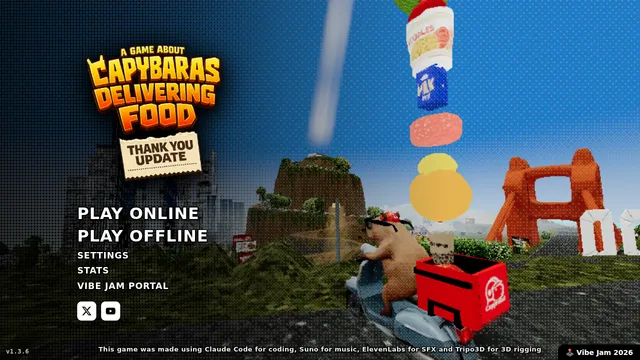
A Game About Capybaras Delivering Food
Drive capybaras around a cozy open world delivering food without toppling the fruit stack.
 ClaudeSimulation 2 votes
 , Online multiplayer
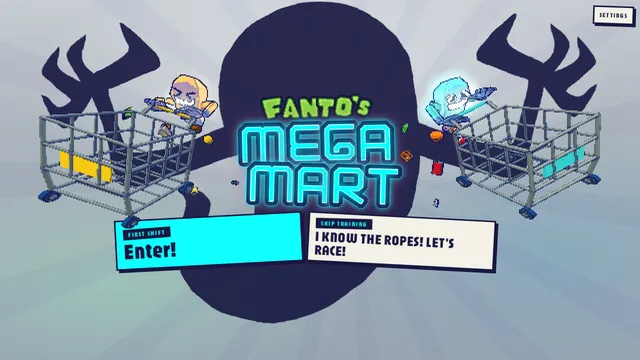
Fanto's Mega-Mart
Race through a haunted grocery store at rocket speed, grabbing items as you go.
 , Phone friendly , Online multiplayer
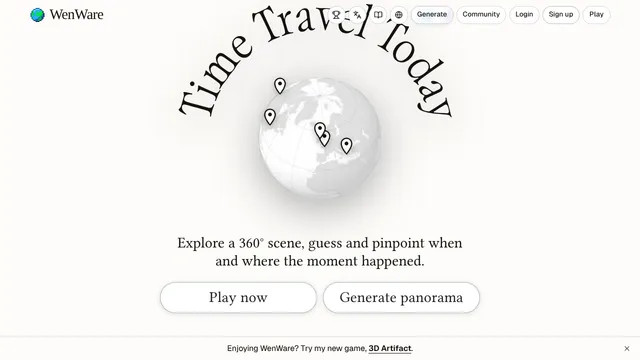
WenWare
Guess the place and year of a 360-degree historical scene.
 , Phone friendly , Online multiplayer
Null Range
Fly a first-person spacecraft and dogfight other pilots online
 , Phone friendly
HALDANE-4
Descend alone beneath the Antarctic ice and uncover what waits below in ASCII.
 , Phone friendly
Kanso
Grow and tend digital bonsai trees in calm, pretty scenes.


Questions
How long does a vibe coding game jam last?
It varies. Vibe Jam 2026 ran for about a month, from April 1 to May 1, 2026, while AI Browser Game Jam 5 on itch.io lists a two-week submission window, October 17 to 31, 2026.
Do you need multiplayer to enter Vibe Jam?
No. The 2026 rules said multiplayer was preferred but not required, and the 2025 rules said a game could be single or multiplayer.
Which engine should you use for a vibe coding game jam?
Vibe Jam 2026 allowed any engine and said Three.js is usually recommended, and most of the jam entries we list use it. Pick a stack you can run and test early enough to finish the game.
Is there a vibe coding game jam coming up?
As of September 29, 2026, AI Browser Game Jam 5 on itch.io takes submissions from October 17 to 31, 2026. Entries must be free, playable in a browser and mostly AI-generated.
How many games entered Vibe Jam 2026?
The jam's press page says 945 games were submitted.
Who won Vibe Jam 2026?
Pieter Levels's results post names A Game About Capybaras Delivering Food first, Fanto's Mega-Mart second and WenWare third.